Follow the White Rabbit. Groupshow
5 September to 31 October 2026 ⟶ Galerie Georg Nothelfer
Exhibition view. Photo: Angelina Kalachenkova

Exhibition view. Photo: Angelina Kalachenkova
Gisbert Pöppler, CHERRY ALUMINIUM DINING TABLE, Aluminium, 74 x 180 x 180 cm, Courtesy of the Artist, Photo: Ragnar Schmuck

Gisbert Pöppler, CHERRY ALUMINIUM DINING TABLE, Aluminium, 74 x 180 x 180 cm, Courtesy of the Artist, Photo: Ragnar Schmuck
Exhibition view. Photo: Angelina Kalachenkova

Exhibition view. Photo: Angelina Kalachenkova
Exhibition view. Photo: Angelina Kalachenkova

Exhibition view. Photo: Angelina Kalachenkova
K. R. H. Sonderborg, Untitled, 1971, acrylic on canvas, 129 x 80 cm

K. R. H. Sonderborg, Untitled, 1971, acrylic on canvas, 129 x 80 cm
Gisbert Pöppler, DADI CASHMERE PLAID, Cashmere, 210 x 130 cm. Courtesy of the Artist, Foto: Ragnar Schmuck

Gisbert Pöppler, DADI CASHMERE PLAID, Cashmere, 210 x 130 cm. Courtesy of the Artist, Foto: Ragnar Schmuck
Exhibition view. Photo: Angelina Kalachenkova

Exhibition view. Photo: Angelina Kalachenkova
Gisbert Pöppler, CORRESPONDENCE CONSOLE , wood, (ash), varnish, 91,5 x 250 x 28 cm. Courtesy of the Artist, Photo: Ragnar Schmuck

Gisbert Pöppler, CORRESPONDENCE CONSOLE , wood, (ash), varnish, 91,5 x 250 x 28 cm. Courtesy of the Artist, Photo: Ragnar Schmuck
Exhibition view. Photo: Angelina Kalachenkova

Exhibition view. Photo: Angelina Kalachenkova
Stöhrer, 1981, Gouache, 70 x 100 cm. Foto: Katrin Rother

Stöhrer, 1981, Gouache, 70 x 100 cm. Foto: Katrin Rother
K.R.H. Sonderborg, 1985, ink, paper, 76 x 56cm. Courtesy Galerie Georg Nothelfer

K.R.H. Sonderborg, 1985, ink, paper, 76 x 56cm. Courtesy Galerie Georg Nothelfer
Stöhrer, 1962, mixed media, paper, 31,5 x 45 cm. Photo: Katrin Rother

Stöhrer, 1962, mixed media, paper, 31,5 x 45 cm. Photo: Katrin Rother
Stöhrer,1977, ink, paper, 29,7 x 21 cm. Photo: Katrin Rother

Stöhrer,1977, ink, paper, 29,7 x 21 cm. Photo: Katrin Rother
Exhibition view. Photo: Angelina Kalachenkova

Exhibition view. Photo: Angelina Kalachenkova
MK Kaehne, Koffer Pissoir, Waschbecken, Detail. Photo: Jiří Žižka

MK Kaehne, Koffer Pissoir, Waschbecken, Detail. Photo: Jiří Žižka
Exhibition view. Photo: Angelina Kalachenkova

Exhibition view. Photo: Angelina Kalachenkova
Exhibition view. Photo: Angelina Kalachenkova

Exhibition view. Photo: Angelina Kalachenkova
MK Kaehne, Things we don't know, 2024, Ink, pigment printing, 65 x 40 cm (framed: 90,5 x 59 cm)

MK Kaehne, Things we don't know, 2024, Ink, pigment printing, 65 x 40 cm (framed: 90,5 x 59 cm)
Exhibition view. Photo: Angelina Kalachenkova
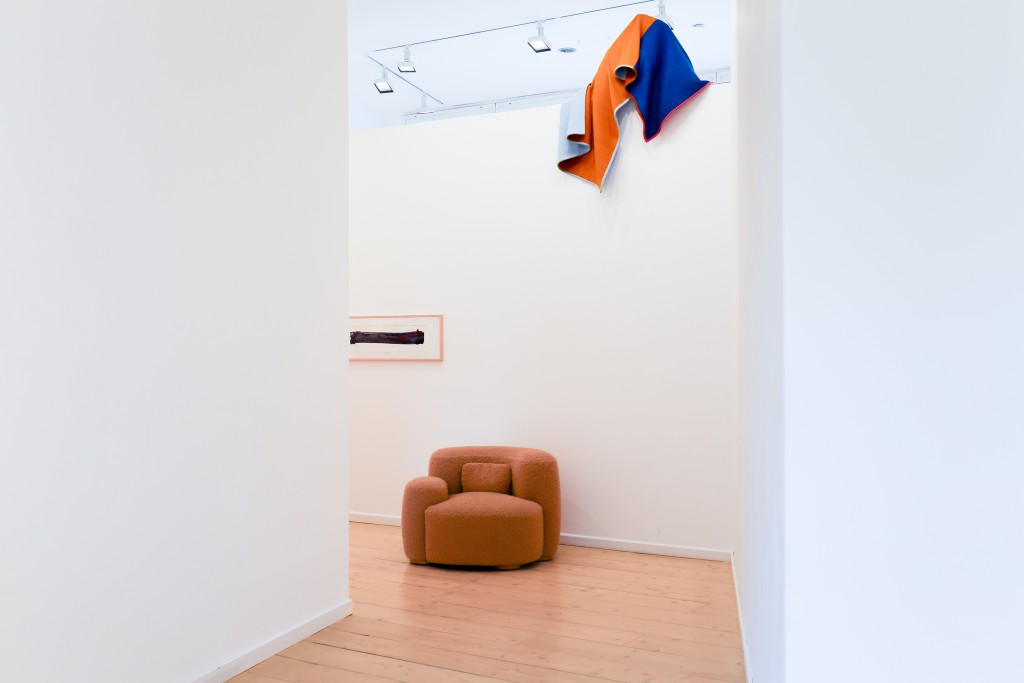
Exhibition view. Photo: Angelina Kalachenkova
Gisbert Pöppler, BABA ARMCHAIR, wood (Teak), textiles, 74 x 115 x 93 cm. Courtesy of the Artist, Photo: Ragnar Schmuck

Gisbert Pöppler, BABA ARMCHAIR, wood (Teak), textiles, 74 x 115 x 93 cm. Courtesy of the Artist, Photo: Ragnar Schmuck
Exhibition view. Photo: Angelina Kalachenkova

Exhibition view. Photo: Angelina Kalachenkova
Walter Stöhrer, Gesicht des Vergessens, 1996, Mixed media, collage, canvas, 250 x 180 cm

Walter Stöhrer, Gesicht des Vergessens, 1996, Mixed media, collage, canvas, 250 x 180 cm
Exhibition view. Photo: Angelina Kalachenkova

Exhibition view. Photo: Angelina Kalachenkova
Exhibition view. Photo: Angelina Kalachenkova
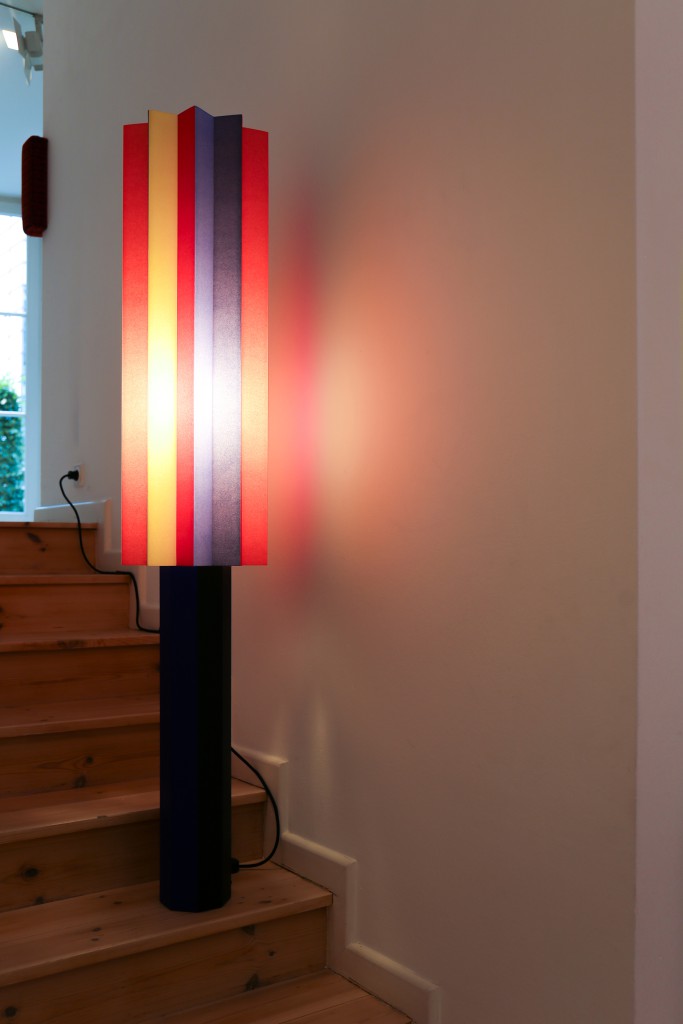
Exhibition view. Photo: Angelina Kalachenkova
Exhibition view. Photo: Angelina Kalachenkova

Exhibition view. Photo: Angelina Kalachenkova
Exhibition view. Photo: Angelina Kalachenkova

Exhibition view. Photo: Angelina Kalachenkova
Gisbert Pöppler, WALKER LACQUERED WHISKEYTABLE, Lacquered wood, steel, 59 x 16 x 16 cm. Courtesy of the Artist, Photo: Ragnar Schmuck

Gisbert Pöppler, WALKER LACQUERED WHISKEYTABLE, Lacquered wood, steel, 59 x 16 x 16 cm. Courtesy of the Artist, Photo: Ragnar Schmuck
KRH Sonderborg, Untitled, 1991, Ink / paper, 36 x 26 cm

KRH Sonderborg, Untitled, 1991, Ink / paper, 36 x 26 cm
Exhibition view. Photo: Angelina Kalachenkova

Exhibition view. Photo: Angelina Kalachenkova
Gisbert Pöppler, BELENUS 137 DINING TABLE, from 2010, high gloss lacquered wood, whitened ash, 75 x 137 x 90 cm. Courtesy of the Artist, Photo: Ragnar Schmuck

Gisbert Pöppler, BELENUS 137 DINING TABLE, from 2010, high gloss lacquered wood, whitened ash, 75 x 137 x 90 cm. Courtesy of the Artist, Photo: Ragnar Schmuck
Gisbert Pöppler, BELENUS 137 DINING TABLE, from 2010, high gloss lacquered wood, whitened ash, 75 x 137 x 90 cm. Courtesy of the Artist, Photo: Ragnar Schmuck

Gisbert Pöppler, BELENUS 137 DINING TABLE, from 2010, high gloss lacquered wood, whitened ash, 75 x 137 x 90 cm. Courtesy of the Artist, Photo: Ragnar Schmuck
Walter Stöhrer, Gefährlich ist es für die Spielpartner, gemeinsam am Ort ihrer Erkenntnis zu verweilen, Sinalunga 1981, mixed techniques, collage on canvas, 210 x 250 cm

Walter Stöhrer, Gefährlich ist es für die Spielpartner, gemeinsam am Ort ihrer Erkenntnis zu verweilen, Sinalunga 1981, mixed techniques, collage on canvas, 210 x 250 cm
Heike Buchfelder, ICED, 2022, extra clear glass, 47 x 52 x 53 cm. Courtesy of the Artist, Photo: Jan Peter Sonntag

Heike Buchfelder, ICED, 2022, extra clear glass, 47 x 52 x 53 cm. Courtesy of the Artist, Photo: Jan Peter Sonntag
Exhibition view. Photo: Angelina Kalachenkova

Exhibition view. Photo: Angelina Kalachenkova
Walter Stöhrer, Black and go I, 1981, Mixed media/canvas, 200 x 260 cm

Walter Stöhrer, Black and go I, 1981, Mixed media/canvas, 200 x 260 cm
Opening: Fri, September 4, 6 - 9 pm
Guided Tour: Sun, September 13, 2 pm
Special opening hours for BERLIN ART WEEK:
Fri, Sept. 11, 12 pm – 9 pm
Sat, Sept. 12, 11 am – 6 pm
Sun, Sept. 13, 11 am – 6 pm
Guided Tour: Sun, September 13, 2 pm
Special opening hours for BERLIN ART WEEK:
Fri, Sept. 11, 12 pm – 9 pm
Sat, Sept. 12, 11 am – 6 pm
Sun, Sept. 13, 11 am – 6 pm
It wasn’t just Alice who followed the White Rabbit…
This narrative image has become firmly anchored in the pop-cultural memory across generations and serves as a metaphor for different paths into the unknown. When we recall the images created by Lewis Carroll’s novel Alice Adventures in Wonderland or by its film adaptations, they transport us back to fantastical worlds. As we read, our minds draw on our experiences and associations to visualise the described scenes, plots, and characters as if in a movie. This requires active cognitive effort, which deepens our identification with what we read and ensures that information and stories are stored in our memory for much longer. For the author, the focus lies on a shift in perspective than on an expansion of consciousness. Hence, the exhibition Follow the White Rabbit explores our perceptual experience through a surreal arrangement. Rather than luring us into the abyss, it reinterprets seemingly inscrutable forms. At the intersection of functional art and collectible design, it opens a space in between. (Re)designed objects have existed at least since Meret Oppenheim, who questioned the practicality of a product. During her surrealist creative phase in 1936, she lined a teacup, along with spoon and saucer completely with fur. When asked by author Alain Jouffroy, “Are you Alice in Wonderland?” she replied, “No. I am the mirror.”1
Today, designers are becoming increasingly free and are developing hybrid concepts without constraint. The center is on a willingness to experiment. Collaborative working methods with artists can be found, for example, in materials research. It is the material, their colours and surfaces or the manufacturing process itself of all these mostly artisanal art forms in which stories are stored rich in detail that create a connection to us as human beings. That is why museums and galleries are increasingly presenting large-scale installations that unite design, architecture, and art. What role do design and art play today? Which functions have already been pushed to the margins of lifestyle and utility, only to be repositioned in new spaces that are otherwise animated by art, art that, until now, was self-sufficient? Does it still work without this statement attributed to it? In the tradition of an art that has come to question its own terms and explores the relationship between form, material, and meaning in various ways, probably not. Duchamp, and later Warhol, had already declared everyday objects and product design to be art, plain and simple. Conceptual and design-oriented forms and narratives are emerging that can also be classified as critical design, objects not primarily intended for everyday use. They open up spaces for critical thinking in which contemporary social conditions are questioned –– or as was already the case with Carroll –– perspectives that are created to overcome them.
In the exhibition Follow the White Rabbit, Gisbert Pöppler’s tabletop reflects not only the room but also the movements depicted in K. R. H. Sonderborg’s drawing. They form visual traces on the surface of the silver-metallic panel—a reference to the material’s eventual transformation through individual, everyday use. These gestural actions consciously and unconsciously reflect Abstract Expressionism or European Art Informel. Heike Buchfelder’s folded floor lamp also draws on design elements primarily from abstract painting, Concrete Art, and Op Art. She uses these to stage rhythm, depth, lighting effects, or the pure impact of colors. Confidently, they create their own aura through their reflection.
The cool, detached aesthetic of her glass objects is reminiscent of the abstractions in Minimal Art only at first glance. With their emotional freedom, they invite the viewer to internalize them.
Gisbert Pöppler’s designs spring from a playful enthusiasm for color and geometric shapes. In a new, almost surreal-seeming figuration, Walter Stöhrer’s explosive color compositions, combined with his metallic-blue construction, reveal a more radical materiality and gestural emotionality. The open-closed yet unifying forms almost flirt conceptually with the raw materials that are further processed, for example, in the automotive industry. These are joined by the precise, sculptural “products” of MK Kaehne. With their exclusive forms and humorous approach, they reinterpret avant-garde tendencies of modernism.
While design has traditionally focused on function and aesthetics and contemporary art on concepts and critical reflection, functional objects that appear unexpectedly absurd also emerge at their intersection. In search of the extraordinary—much like in the White Rabbit’s Wonderland of yesteryear—they encourage us to rethink our perspectives and celebrate the joy of unique things in life and art — or as is now the case at Galerie Nothelfer, to discover something new in the yet-unknown...
Text: Harald F. Theiss
_____________
1 Cf., Isabel Schulz, Edelfuchs in Morgenrot, Studien zum Werk von Meret Oppenheimer, publisher Silke Schreiber, München 1993